
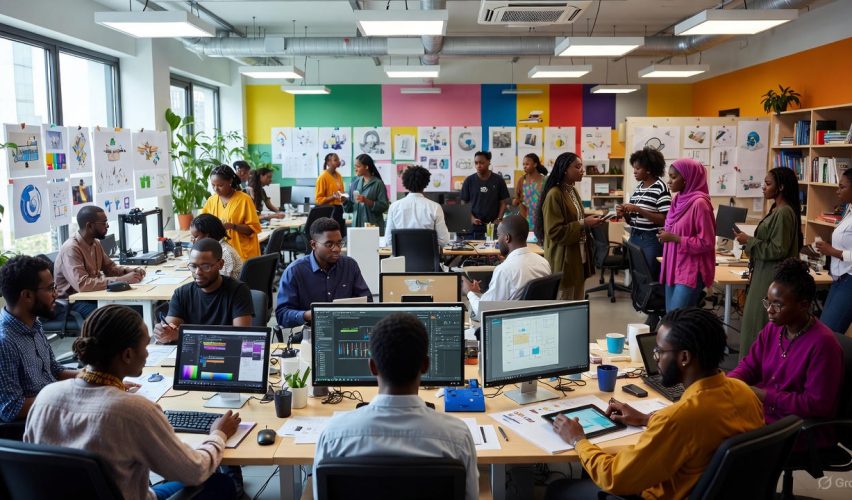
In the ongoing discourse surrounding “global design standards,” a critical oversight persists: the unique challenges African designers address daily. Is African design truly “behind,” or is the perceived gap rooted in disparities of resources, investment, and infrastructure?
At Designer Tribune, we assert that African designers are not lagging; they are world-class problem solvers actively shaping the global design language. The true hurdle lies in cultivating ecosystems that nurture their ingenuity.
Fundamentally, there is no inherent divide in creative vision, strategic acumen, or aesthetic excellence. African designers deliver indispensable value through hyper-local innovations, such as intuitive UX/UI tailored for low-bandwidth, multilingual, and diverse environments, challenges many international counterparts have yet to confront. Their product designs emphasise resilience, resourcefulness, and local sourcing, addressing real-world regional obstacles with unmatched practicality. Moreover, they pioneer distinct aesthetics inspired by Afro-futurism and traditional graphic systems like Adinkra symbols and Ndebele patterns, which are increasingly influencing global branding and digital art.
The verdict is clear: African designers are pivotal contributors to universal design principles, deserving far greater recognition for their role in redefining the field.
Yet, scaling this talent faces structural barriers that eclipse creativity. Digital infrastructure remains a primary impediment, with unreliable power, costly high-speed internet, and restricted access to licensed software stifling progress. In physical design, the scarcity of local manufacturing and prototyping facilities renders production expensive and sluggish. Global payments and exports add further complexity, often proving convoluted and prohibitive. Compounding these issues is inadequate intellectual property protection, leaving designs susceptible to unauthorized replication and denying creators fair compensation.
These obstacles do not diminish the skill or potential of African designers; they merely constrain their reach. In fact, African talent leads in areas where the global North is only beginning to adapt: crafting effective interfaces for low-spec devices, prioritizing inclusivity through multilingual and low-literacy solutions, and advancing sustainable material innovations with minimal environmental impact.
To harness the African creative sector’s potential, estimated at over $35 billion, we must pivot toward systemic solutions. This includes establishing digital hubs with reliable connectivity, FabLabs, and shared prototyping spaces; implementing standardisation through regulatory bodies, global certifications, and robust IP safeguards; and channelling venture capital into design agencies, studios, and industrial startups.
African design has long been profound, purposeful, and steeped in cultural significance. Today’s emerging talents are propelling this legacy into bold new territories.
At Designer Tribune, we’re committed to amplifying these voices, fostering the support they need to thrive globally.